Indian Chief Iris (Iris x germanica cv.)
Hardy, spring-flowering rhizomatous perennial
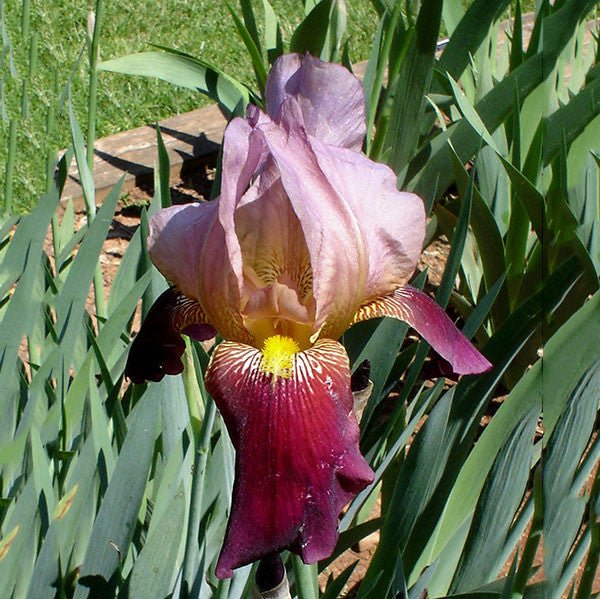
Description: Lovely maroon bitone iris with lighter maroon standards and darker, velvety maroon falls; orange to deep yellow beards
Habit: Erect, clump forming plants grow 2-4 feet high and 1-2 feet wide; spreading slowly in width
Culture: Prefers loamy, well-drained soil and full sun; divide roots after flowering in July through August; plant roots slightly above soil surface
Hardiness: Cold hardy to USDA Zone 3
Origin: Garden origin
Attributes: Deer resistant; Drought tolerant
German or Bearded Iris have been cultivated since 1000 BC and first cited in American literature in 1672. Jefferson referred to iris as “flags,” a term still used today. The development of Bearded Iris began in the 19th century and continues to this day. The “beard” is the patch of hairs extending down the three lower petals (“falls”), below the three upper petals (“standards”). ‘Indian Chief’ was bred in 1929 by Dr. Wylie McLean Ayres of Cincinnati, Ohio. Bearded Iris are deer resistant and drought tolerant.
Arrives in a 5" pot.
Original: $10.00
-65%$10.00
$3.50Product Information
Product Information
Shipping & Returns
Shipping & Returns
Description
Hardy, spring-flowering rhizomatous perennial
Description: Lovely maroon bitone iris with lighter maroon standards and darker, velvety maroon falls; orange to deep yellow beards
Habit: Erect, clump forming plants grow 2-4 feet high and 1-2 feet wide; spreading slowly in width
Culture: Prefers loamy, well-drained soil and full sun; divide roots after flowering in July through August; plant roots slightly above soil surface
Hardiness: Cold hardy to USDA Zone 3
Origin: Garden origin
Attributes: Deer resistant; Drought tolerant
German or Bearded Iris have been cultivated since 1000 BC and first cited in American literature in 1672. Jefferson referred to iris as “flags,” a term still used today. The development of Bearded Iris began in the 19th century and continues to this day. The “beard” is the patch of hairs extending down the three lower petals (“falls”), below the three upper petals (“standards”). ‘Indian Chief’ was bred in 1929 by Dr. Wylie McLean Ayres of Cincinnati, Ohio. Bearded Iris are deer resistant and drought tolerant.
Arrives in a 5" pot.