Greek Oregano (Origanum vulgare subsp. hirtum)
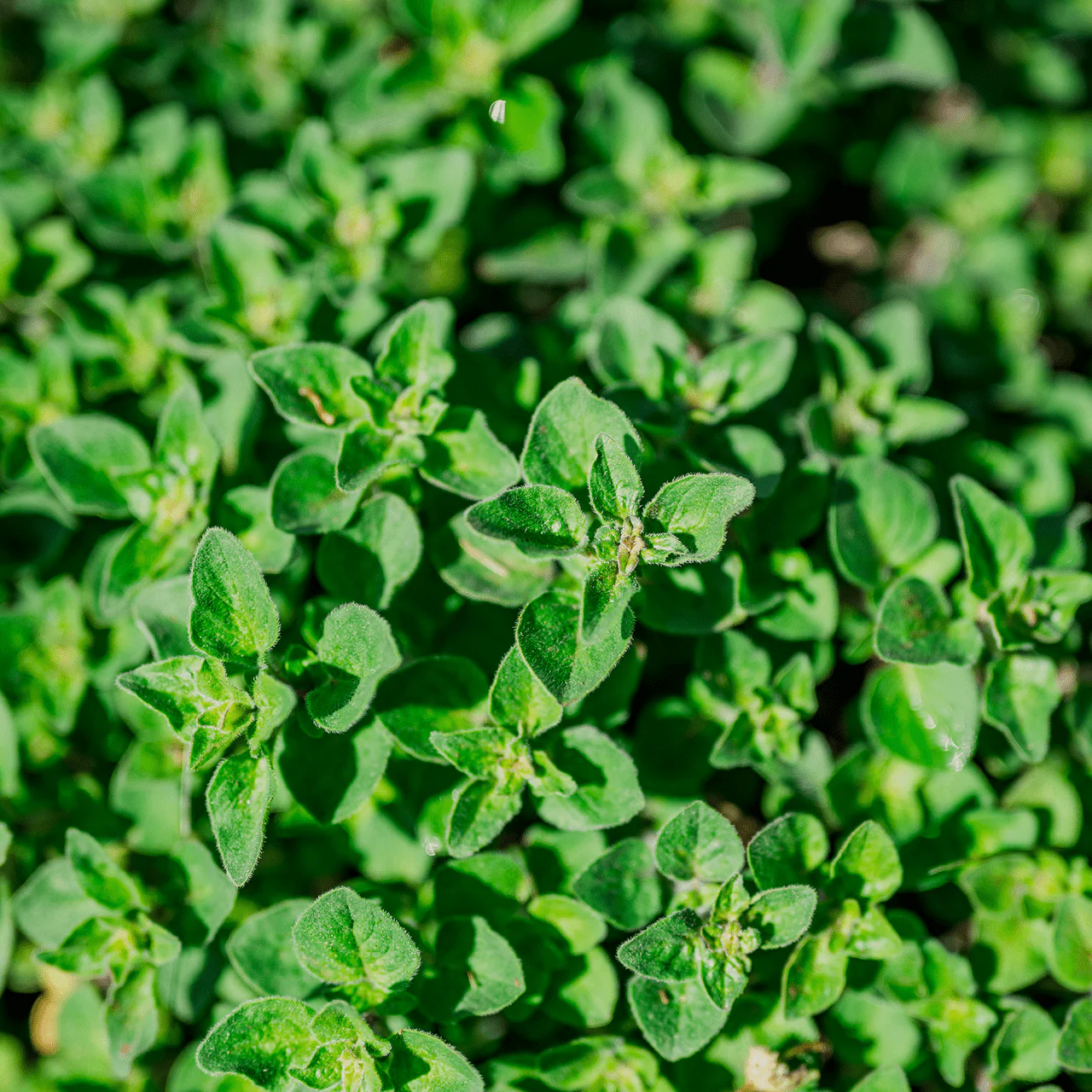
Description: Hardy, perennial herb - Aromatic, dark green leaves are grown for culinary purposes. Cream-colored flowers are borne in July to September.
Habit: Grows 6-18" high; spreading
Culture: Prefers full sun and well-drained soil
Hardiness: USDA Zones 5 through 9
Origin: Mediterranean
Attributes: Attracts bees and butterflies, deer and rabbit resistant, drought tolerant, culinary uses
Jefferson documented
Oregano is native to Europe and Asia and is cultivated in North America. The common name, Oregano, is derived from the Greek, oros, 'a mountain', and ganos, 'joy', alluding to its delightful appearance on the mountain sides. Oregano has a long history of medicinal and culinary use. The Greeks believed it brought joy to the dead and planted it on graves. Both the Greeks and Romans considered it a symbol of happiness and used it to crown young couples. Oregano may be used fresh or dried. To dry, gather the branches in August or September and hang in small bunches in a well-ventilated, dry location.
Greek Oregano (Origanum vulgare subsp. hirtum) arrives in a 1 quart pot.
Product Information
Product Information
Shipping & Returns
Shipping & Returns
Description
Description: Hardy, perennial herb - Aromatic, dark green leaves are grown for culinary purposes. Cream-colored flowers are borne in July to September.
Habit: Grows 6-18" high; spreading
Culture: Prefers full sun and well-drained soil
Hardiness: USDA Zones 5 through 9
Origin: Mediterranean
Attributes: Attracts bees and butterflies, deer and rabbit resistant, drought tolerant, culinary uses
Jefferson documented
Oregano is native to Europe and Asia and is cultivated in North America. The common name, Oregano, is derived from the Greek, oros, 'a mountain', and ganos, 'joy', alluding to its delightful appearance on the mountain sides. Oregano has a long history of medicinal and culinary use. The Greeks believed it brought joy to the dead and planted it on graves. Both the Greeks and Romans considered it a symbol of happiness and used it to crown young couples. Oregano may be used fresh or dried. To dry, gather the branches in August or September and hang in small bunches in a well-ventilated, dry location.
Greek Oregano (Origanum vulgare subsp. hirtum) arrives in a 1 quart pot.